
Beverly Atkins shares the Feldenkrais Method® with us and explains how gentle movement can relieve pain.
Beverly’s mission is simple: help people feel better by getting unstuck from old patterns.
For most of her life, Beverly had undiagnosed ADHD and compensated with grit. She completed the Hawaii Ironman in 2009. In 2014, while working at Facebook’s Los Angeles office, the fast pace was manageable—it was the loud, open-office environment that overwhelmed her nervous system—and put her back out and couldn’t walk upright because of the pain.
Nothing was helping. Desperate and skeptical, she crawled into a Feldenkrais® Awareness Through Movement®. It seemed strange—until she stood up and her back pain was gone. What just happened?
That moment of curiosity changed everything. First, she thought of her mother—a psychologist at a pain care center who went on disability because of debilitating back pain (you can’t make that up). Conventional treatments didn’t help. At 53, facing what felt like a lifetime of chronic pain, she lost hope and died by suicide.
The most heartbreaking part for Beverly when she discovered how gentle movement can relieve pain? That the Feldenkrais Method® had been around for decades. If her mother had access to this whole-body approach, would she have moved out of pain? That question became Beverly’s driving force: make these lessons accessible.
As she began doing daily lessons at home, something unexpected happened. Her back stayed better—and her focus improved too. Her work struggles softened. People said she was a better listener. She even found herself adjusting to the open-office culture, by calming her nervous system each morning with a lesson before work.
When she was later diagnosed with ADHD, it all made sense—the lessons had been quietly rewiring her brain. Neuroscience confirms that mindful movement can improve executive function, focus, and sleep. Now Beverly had a second why: nervous system regulation and focus for inattentive brains.
Eager to learn more, Beverly enrolled in the four-year training to become a Guild Certified Feldenkrais Practitioner®. In 2020, she left Facebook to open a private practice. Clients often asked if she was a sorcerer. She reminded them: your body is designed to heal. These lessons simply help unstick a nervous system caught in a loop.
Today, Beverly personally reviews every lesson published in Pauseture. She added a unique filter—Active vs. Still/Subtle—to help ADHD brains choose what they need. On high-energy days, an active lesson helps ease into focus and calm. Still lessons—like traditional meditation or breath work—can feel irritating. Now at 59, Beverly still swims, bikes, and runs—injury free—and her back pain has never returned. When small pains arise, she gets curious, and pain resolves by interrupting patterns that lead to the pain.
Pauseture exists to serve several whys: To prevent others from losing hope, as Beverly’s mother did. To help inattentive brains find the regulation they need to thrive. And to give people agency over their own movement and health. Not someday. Now. Because feeling better shouldn’t be a luxury.
Resources:
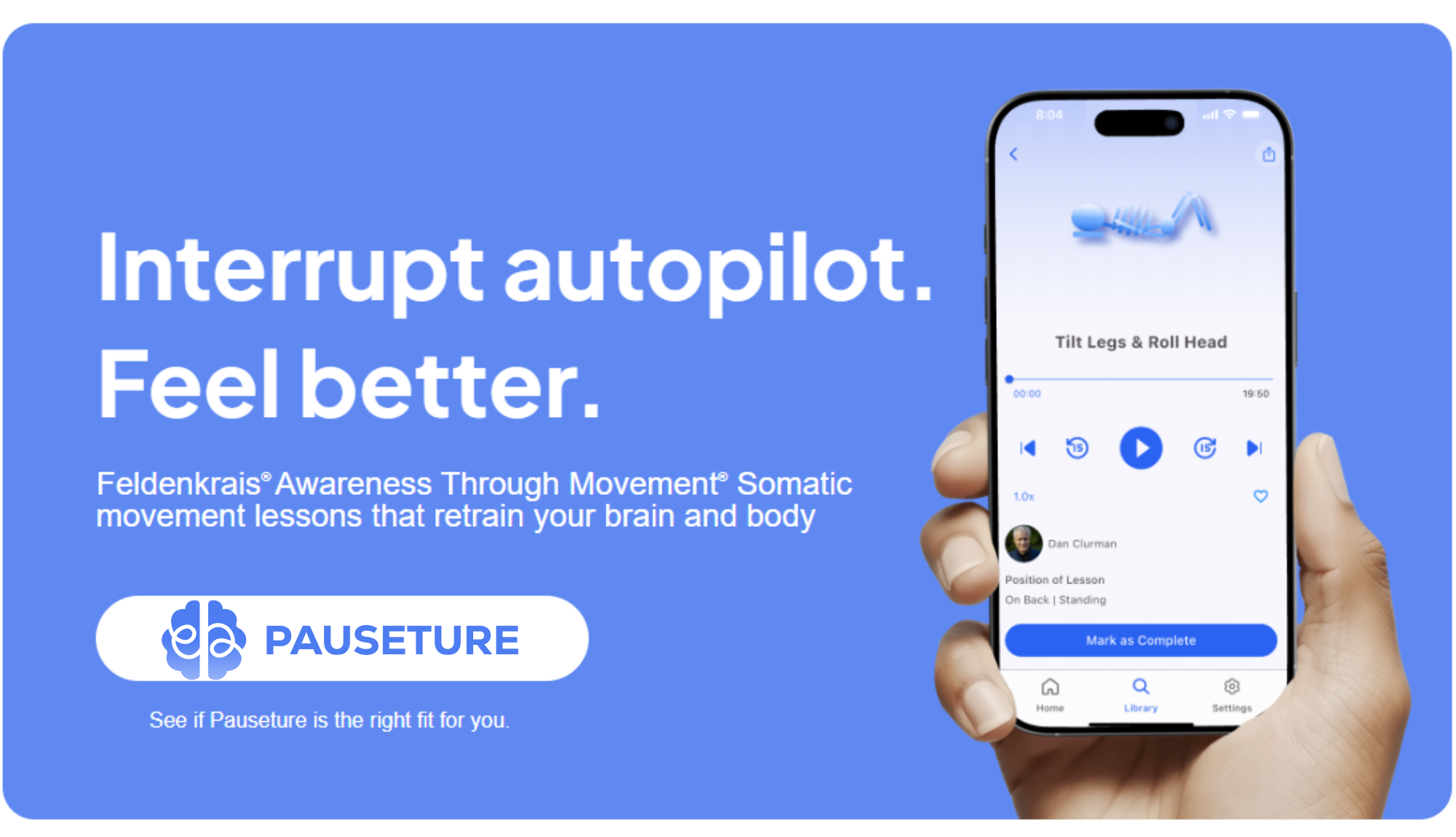
Download the app and get a 30-day free trial using code BACK30
Show Sponsor:


 Episode 176 Dr. Steven Baroody – Shoulder Pain
 Episode 332 Dr. Kurt Olding – Stenosis
 Episode 167 Daniel G. Lyman LCSW – Psychotherapy for Chronic Pain
 Episode 112 Dr. Roy Chan – Degenerative Scoliosis
 Episode 87 Dr. Kevin Moriarty – Compression Fracture
 Episode 154 Dr. Evan Halbert – FIbromyalgia

Leave a Reply